Small Mobile Batching Plants vs. Self-Loading Concrete Mixer Trucks: Which Is Right for Your Project?
The selection of concrete production equipment for a project is a strategic decision that extends beyond simple volumetric capacity. It involves a fundamental choice between two distinct operational doctrines: centralized batching and autonomous, mobile mixing. The small mobile batching plant and the self loading concrete mixer truck represent the pinnacle of each approach. The former functions as a compact, relocatable production hub, while the latter consolidates loading, mixing, and transport into a singular, self-contained unit. A proper evaluation requires a dispassionate analysis of their inherent operational paradigms, their limitations and advantages regarding site constraints, and a rigorous financial projection of total project cost. This is not a question of superior technology, but of optimal application.

Defining the Operational Paradigm: Centralized Production vs. Autonomous Delivery
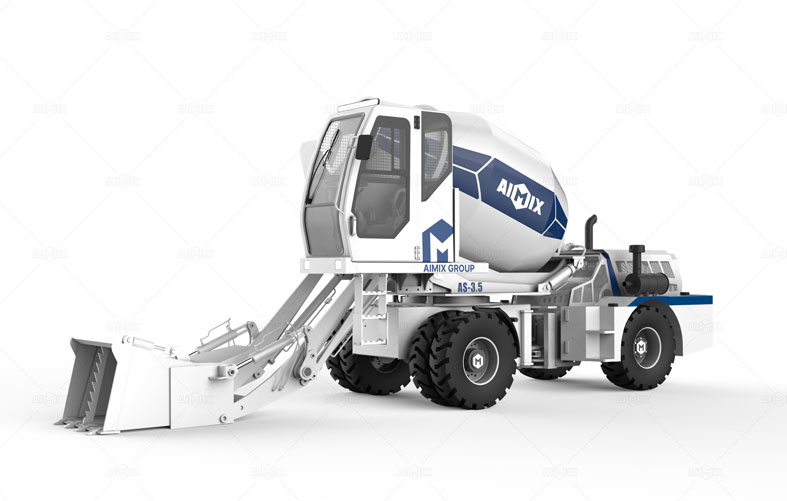
A small mobile batching plant operates on the principle of centralized batch production. It is typically towed to a site and established in a fixed, optimal location. From this hub, it produces concrete in discrete, high-volume batches which are then discharged into waiting transit mixer trucks or dumpers for transport to the various points of placement around the site. This model excels in projects with a defined, stationary production point and multiple, scattered pour locations. It provides exceptional control over mix design consistency for the entire project from a single source. The self-loading mixer truck, in contrast, embodies the principle of autonomous delivery. It is not fed from a central plant; it is the plant. Equipped with an onboard loading system, water tank, and aggregate hoppers, it can self-load raw materials from stockpiles, batch, mix, and transport the concrete to a single placement point—all with one machine and one operator. Its paradigm is one of independence and point-to-point logistics, eliminating the need for supporting loading equipment and separate transport at the project level.
The Terrain and Site Accessibility Calculus
The physical characteristics of the project site impose decisive constraints. A mobile batching plant for sale, while relocatable, requires a significant footprint for setup. It needs a stable, level area for the plant itself, space for aggregate stockpiles, cement silos, and maneuvering room for supply trucks and concrete transporters. It is ill-suited for extremely confined, narrow, or densely obstructed sites. Its utility is also tied to the quality of internal site access roads for its supporting truck fleet. The self-loading mixer truck presents a different profile. Its primary advantage is superior mobility and access in constrained or underdeveloped terrain. It can navigate rougher ground to reach a material stockpile, mix en route, and often place concrete directly via a limited-reach chute or attached pump. However, its production cycle is sequential; it can only service one pour location at a time before returning to the stockpile for reloading. For a project with a single, repetitive pour location that is difficult for multiple vehicles to access—such as a remote foundation or a segment of rural road—the self-loader's logistics are inherently more efficient. For a sprawling site requiring simultaneous concrete placement in multiple quadrants, the continuous supply from a central batch plant is operationally necessary.
Economic and Logistical Determinants for Project Viability
The final selection criterion is a comprehensive financial and logistical analysis. A mobile batching plant, while a higher initial capital asset, establishes a production economy of scale. Its cost-per-cubic-meter becomes increasingly advantageous as the total project volume increases, as the fixed cost of setup is amortized over a larger output. It requires a more complex initial setup of supporting infrastructure and a coordinated fleet of transport vehicles. The self-loading mixer truck offers a lower barrier to entry and excels in logistical simplicity for appropriate projects. Its economic model is one of operational consolidation; it reduces the required fleet, fuel, and labor for material handling and transport. However, its per-unit production cost is generally higher, and its total daily output is capped by its cycle time of load, mix, travel, discharge, and return. Therefore, the decision matrix is clear: for large-volume projects with substantial total cubic meters, multiple concurrent pour sites, and adequate space for a production hub, the small concrete batching plant delivers superior long-term economic efficiency. For projects characterized by lower total volume, difficult access, sequential pours, or a premium on logistical simplicity and rapid deployment, the self-loading mixer truck provides a more viable and cost-effective solution. The correct choice is dictated by a precise alignment of the equipment's inherent paradigm with the project's specific physical and economic contours.


