The production of manufactured sand, or artificial sand, is a deliberate industrial process engineered to create a consistent, high-performance aggregate essential for modern construction. It moves far beyond simple rock crushing, representing a targeted metamorphosis of raw, coarse material into a finely graded, functional product. This process systematically addresses the increasing scarcity of natural sand in many regions and the stringent technical requirements for concrete, asphalt, and mortar applications. Each stage, from raw material selection to final classification, is governed by specific mechanical and operational principles designed to optimize the shape, size distribution, and cleanliness of the final sand particles. Understanding this progression is key to appreciating manufactured sand not as a mere substitute, but as a technologically advanced material in its own right.
Feedstock Selection and Preparation: The Foundation of Quality
The quality of the finished sand is intrinsically linked to the geology of the source material. Not all rock is suitable. Ideal feed rock is hard, abrasive-resistant, and chemically inert. Common sources include granite, basalt, limestone, and durable river gravel. A comprehensive geological and petrographic analysis precedes extraction, assessing parameters like compressive strength, abrasion value, and the presence of deleterious minerals that could affect concrete durability, such as reactive silica or clay. This selection phase is critical; a poor-quality feed stock cannot be transformed into a high-quality sand through processing alone.
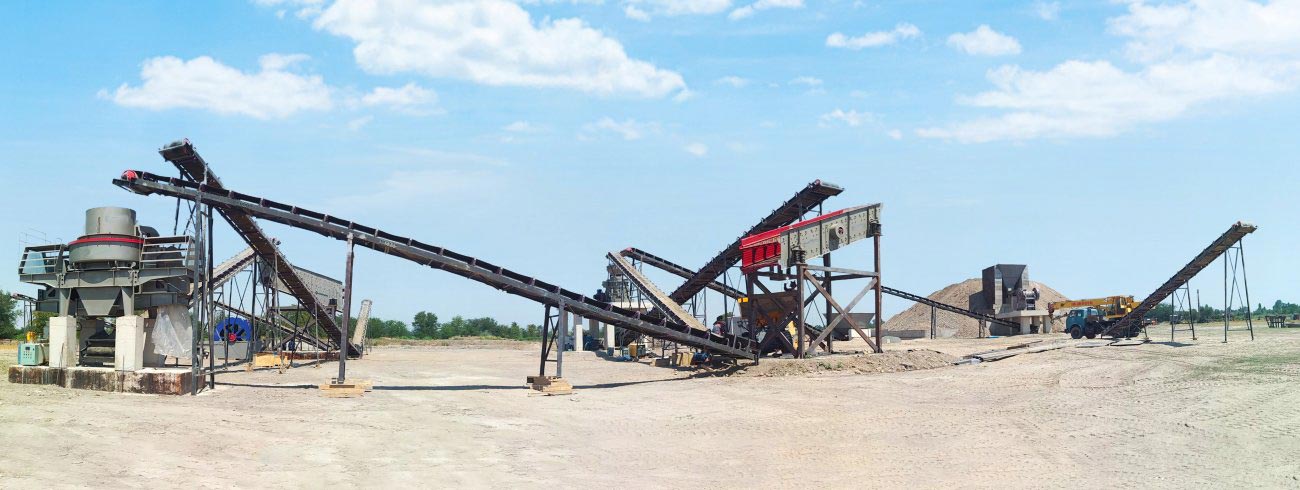
Once extracted, the raw rock undergoes primary preparation. It is first subjected to primary crushing, typically in a jaw crusher mobile, to reduce massive boulders to manageable fragments, usually under 200mm in size. This material is then often processed through a secondary cone crusher to achieve a more uniform feed size, ideally between 40mm and 80mm, optimized for the intake parameters of the sand making machine. Consistent feed size is a crucial operational variable. It prevents blockages and ensures a stable, efficient crushing environment within the sand maker, allowing for uniform energy transfer and particle fracture. This preparatory stage establishes the physical and chemical baseline for the entire operation.
The Core Transformation: Fracture Mechanics in the Sand Making Machine
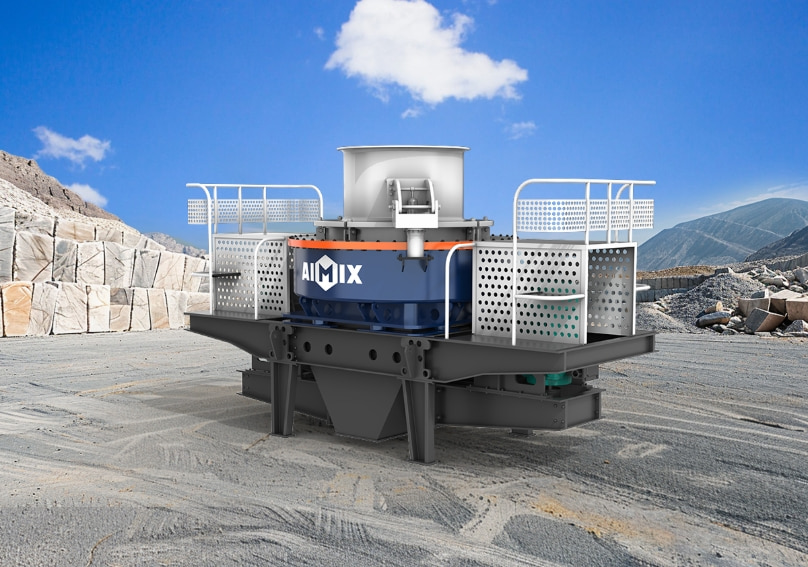
The heart of the process is the sand making machine itself, where the decisive transformation occurs. Two principal technologies dominate: the high-speed impact crusher (Vertical Shaft Impactor or VSI) and the autogenous grinding mill. Each employs distinct fracture mechanics. In a VSI, rock is accelerated by a high-velocity rotor and flung against a stationary anvil ring or into a dense rock bed within the crushing chamber. This impact-induced fracture tends to produce cubical, well-shaped particles with fractured faces, a desirable characteristic for strength in concrete. The kinetic energy is carefully calibrated to shatter the rock along its natural cleavages.
The alternative method, inter-particle crushing, often occurs in a high-pressure grinding roll or within certain autogenous mill configurations. Here, the rock feed is compressed between two surfaces or against itself, causing breakage primarily at the points of contact between particles. This method can offer superior energy efficiency for certain rock types. Across both systems, control parameters are paramount. Rotor speed, feed rate, and the cascade of material within the chamber must be in precise balance. An incorrect feed rate can lead to a rock-starved chamber, causing excessive wear on components, or an overloaded one, resulting in poor particle shaping and inadequate size reduction. The operator's goal is to create an optimal "rock-on-rock" or "rock-on-metal" environment that maximizes the production of sand-sized particles with the correct morphology.
Post-Processing and Classification: Achieving Specification
Material exiting the sand making machine is a mixture of sand-sized particles, residual oversized grit, and fine dust or microfines. This crude product requires refinement to meet industry specifications. The first stage is often screening. Vibrating screens separate the product into distinct size fractions, sending oversize material back for recirculation. The sand fraction then typically proceeds to a washing phase. This serves a dual purpose: it removes unwanted clay coatings, silt, and organic matter that can weaken the bond with cement, and it separates the very fine microfines. While a controlled amount of microfines can be beneficial for concrete workability, excessive amounts are detrimental. Modern washing plants employ cyclones and dewatering screens to precisely strip out these ultrafines, producing a clean, consistent product.
The final step is precise gradation control. Air classifiers or sophisticated screening decks are used to blend different sand streams to achieve a target particle size distribution curve, often conforming to standards like ASTM C33. This engineered gradation ensures optimal packing density when the sand is used in concrete, minimizing voids and reducing the paste requirement. The process, from bulk rock to specification-grade sand, is a closed-loop system of mechanical forces, water management, and particle sorting. The result is a manufactured material that provides predictable performance, addressing both the environmental imperative to conserve natural resources and the engineering demand for higher, more reliable construction standards.


